Why Do Children Play? And Why Does It Matter?
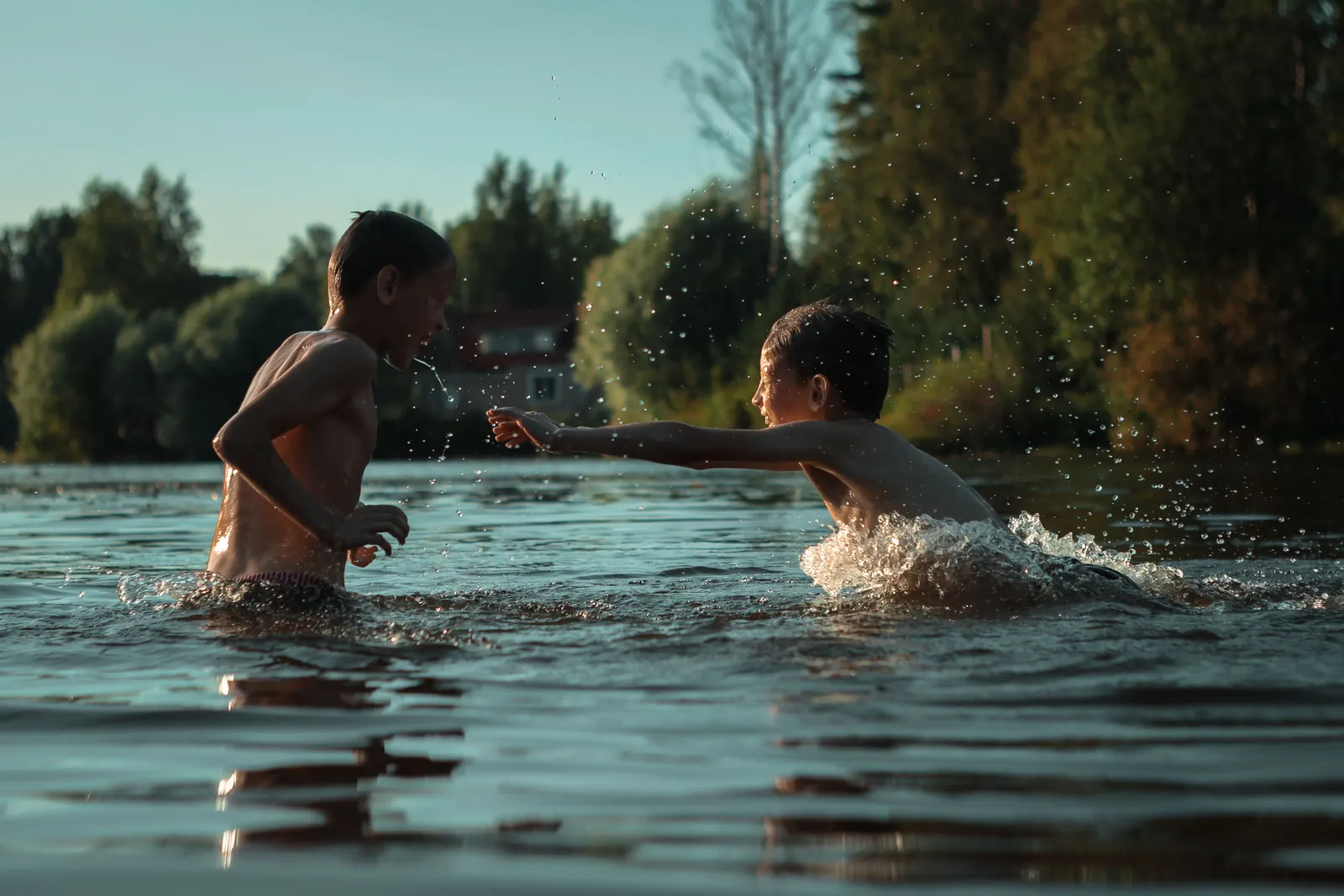
"Play is the continuous evidence of creativity, which means aliveness."
p. 144
Talking about play in childhood always seems relevant to me, especially at a time when screens take over the scene earlier and earlier. Have you ever stopped to think about the importance of play in childhood? Do you remember what it was like in your time? How did you relate to play? What did you like most, where did you play, with whom, and how did you build your imaginary world?
Starting from these memories seems valuable to me, because it can stir the feelings of those who are responsible for the place that play can, and should, have in children's lives. I will not talk about the many harms of screens, since they have already been widely discussed. Instead, drawing on a text by D. W. Winnicott, I want to offer elements for becoming aware of how complex children's play is, and of its importance and meaning in the life of a human being who matures emotionally, grows biologically, and gains a body in the world and in social relationships. I want to highlight play as the place where it is possible to live in a true and creative way, which means being able to integrate the inner world and the outer world.
From a very early age, babies are in contact with a wide variety of objects: the caregiver, with their body, breast, lap, face, hands and voice, and also the objects of the world around them, such as pots, lids, lights and animals. Babies are curious beings, and every day they observe, memorize, explore through the senses, use objects, and build relationships with them. It is from this exploration that, later on, play takes the form we know.
More clearly, it is around the age of 2 or 3 that the world of fantasy comes onto the stage and children begin to create stories, settings, dialogues and many kinds of situations. What are they doing here? They are working through life, through experiences they have lived but, many times, have not yet worked through. An unpleasant visit to the doctor, a hospital stay, a long absence of the caregivers, a conflict between friends, a change the child did not understand, and so on. All of this can appear as elements of play that allow the child to understand an experience better, favoring the integration of what they have lived.
Play is also pleasurable for children in itself, but not only because it involves some amusement: it also makes room for working through what was held back as anguish, anxiety and aggressive feelings. Being aggressive in life is not simple, either for the child or for the adults who care for them. For this reason, it is often through play that the child can live this feeling. Hence the importance of accepting that aggression appears in play, without moralizing. Winnicott (1942) speaks about anxiety in play:
"Anxiety is always a factor in a child's play, and often it is a major factor. Threat of excess of anxiety leads to compulsive play, or to repetitive play, or to an exaggerated seeking for the pleasures that belong to play."
p. 144
We can easily notice how much play means to a child when it is hard for them to stop playing and do something we ask of them, such as brushing their teeth or eating. There is something very deep and subjective in this act, and a space where feelings are organized. Play works as a link between the child's inner world and shared reality. "Play provides an organization for the initiation of emotional relationships, and so enables social contacts to develop." (D. W. Winnicott, 1942, p. 146)
Just as we gain experience by working and make friends and enemies in the workplace, a child gains life experience by playing. This opens the possibility of making friends and living through conflicts. First alone, then with someone close, and later with friends, the child can enrich their world through play.
When playing with other people, the child needs to communicate with the other and negotiate each person's wishes. This offers a great opportunity for expanding emotional and relational capacity. In general, adults can help by teaching traditional games, but what matters most is the children's own initiative.
Finally, when a child does not want to stop playing, remember how much they are living in that act, and how much emotional, bodily and social engagement is there. Negotiating and giving advance notice of the next task or demand can be very important. When a child says "just a little longer", they are often saying: "I haven't finished living this yet."
At a time when screens are more and more present, protecting the time and space for free play is a form of care. Play is one of the most important ways of living in childhood.
Reference: D. W. Winnicott (1942), The Child, the Family and the Outside World. Chapter: "Why do children play?"